


The fleece is the cornerstone of the 3-layer system: it must trap warm air while allowing moisture to escape. Here is our selection of the best Cimalp fleeces to keep you going on every trail.
1. The best-seller: JORASSE
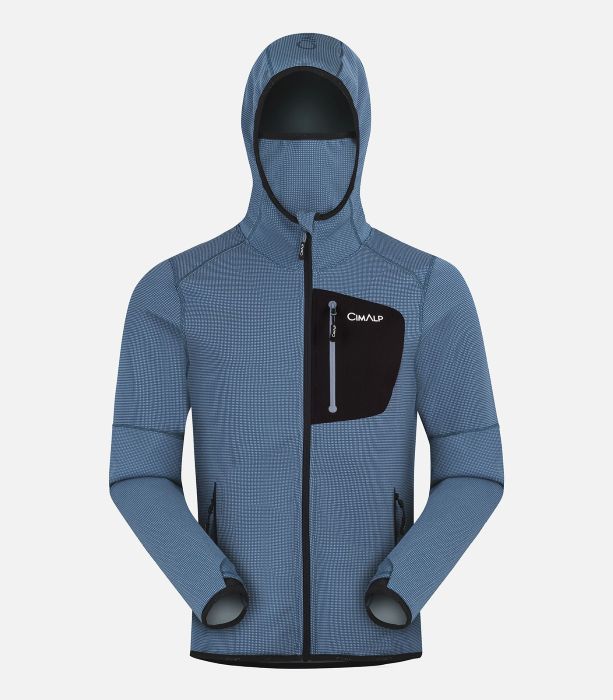
Who is it for? Hikers who move across rough terrain and need a durable garment. The JORASSE is far more than a simple fleece. Thanks to its 3D-FLEX technology, it offers total stretch in every direction while delivering superior abrasion resistance. Built to last, even against repeated friction from a backpack or rock face.
- Key strength: A perfect balance between thermal insulation and built-to-last durability. Its ergonomic cut and protective stand-up collar make it a top ally in tough conditions.
- Usage: Hiking, mountaineering, trekking.
2. The most versatile: ADELIE / ALASKA

Who is it for? Those looking for an effective, simple and affordable mid-layer for any outing. The ADELIE sweatshirt is the Swiss army knife of the outdoor wardrobe. Made with Thermopolar 200, it delivers ideal mid-level warmth for the majority of weather conditions. Its 1/2-zip collar allows you to regulate ventilation according to effort.
- Key strength: An excellent weight-to-warmth ratio and compact packability. It tucks easily to the bottom of your pack and works equally well as a mid-layer sweatshirt or as a base layer.
- Usage: Day hiking, travel, skiing.
3. The warmest: VERCORS / VEYMONT

Who is it for? Those who feel the cold easily or face sub-zero temperatures. When the mercury drops dramatically, the VERCORS jacket steps up. Using the Thermopolar 300 fabric (the thickest in the range), it creates a true thermal cocoon. Its enveloping hood effectively protects the ears and neck — the areas most vulnerable to heat loss.
- Key strength: Maximum thermal insulation. This is the fleece you reach for during a winter bivvy or a blustery summit lunch break.
- Usage: Extreme cold, snowshoeing, high-altitude mountaineering.
4. The most protective: CINTO / PAGLIA (Gilet)

Who is it for? Active hikers who want to shield their core from the wind without overheating their arms. The CINTO gilet combines the benefits of a fleece with windproof protection. Its sleeveless construction allows total freedom of movement and prevents moisture build-up under the arms during intense effort.
- Key strength: Its windproof membrane on the chest that blocks the chills, while maintaining excellent overall breathability.
- Usage: Hiking, cross-country skiing, nordic walking.
5. The most technical: CHIRAN / BISANNE

Who is it for? Demanding athletes who engage in sustained, cardio-intensive effort. The CHIRAN fleece uses Cimagrid technology. Its internal grid structure (small squares of fleece separated by air channels) enables record-breaking moisture evacuation while retaining the necessary warmth during static phases.
- Key strength: Exceptional breathability and lightweight feel. It dries much faster than a standard fleece, keeping you dry during effort.
- Usage: Fast-hiking, mountaineering, intense effort.
6. The cosiest: ICEBERG (Gilet)

Who is it for? Those looking for a targeted and ultra-comfortable source of warmth. The ICEBERG gilet is all about pure thermal comfort. Using the sleeveless Thermopolar 300, it delivers massive core warmth right where your vital organs are, while remaining very lightweight and easy to layer.
- Key strength: Minimal bulk for maximum warmth. It's the perfect layering piece to pull on over a technical t-shirt or under a waterproof jacket.
- Usage: Bivvy, winter hiking, après-ski.
7. The most lightweight: BLIZZARD

Who is it for? Ultra-light walkers who want active thermal regulation. The BLIZZARD jacket strikes the perfect balance between protection and breathability. Ultra-stretch and close-fitting, it follows your every move without restriction. Its technical fibre is engineered to transfer moisture to the outside instantly.
- Key strength: Its second-skin feel and record-breaking lightweight construction. Ideal for cool mornings when you plan to move fast and hard.
- Usage: Fast hiking, trail running.
Buying guide: Choosing the right hiking fleece
For it to be effective, it must integrate seamlessly into the 3-layer system.
The role of the fleece: the second layer
In the hiker's kit, the fleece takes the role of the insulation layer.
- Its job: Trapping air (the best insulating material) within its fibres to keep you warm.
- Its constraint: It must remain breathable to transfer moisture from your base layer to the protective jacket (3rd layer). If it retains water, you will feel cold the moment you stop.

Understanding Cimalp weights and technologies
Choosing a hiking fleece jacket depends primarily on the intensity of your effort and the outside temperature. At Cimalp, we distinguish:
- Thermopolar 200 (Versatility): The standard option. Not too thick, not too thin, it delivers balanced insulation for most spring or autumn hiking trips. The ultimate do-it-all mid-layer.
- Thermopolar 300 (Maximum protection): Thicker and denser, this weight is reserved for winter conditions or those who feel the cold easily. It traps far more air, but is also bulkier to pack.
- Cimagrid technology (Active performance): Here, the fabric features an internal grid structure. This insulates key zones while actively allowing air to circulate where you sweat. It's the number one choice for ski touring or fast-hiking.
- 3D-Flex technology (Freedom and built-to-last durability): Found on the most technical models (such as the JORASSE), this technology delivers exceptional stretch in every direction. It allows the fleece to follow your movements without ever restricting your arms or riding up above the waist, while offering increased resistance to backpack friction.
3. The details that make the difference
Before confirming your order, check these few points:
- Stand-up collar: Useful for preventing heat loss around the neck.
- Stretch: A fleece that is too stiff will restrict your movement, especially when wearing a heavy backpack. Stretch allows the jacket to follow your arms without riding up above the waist.
- Ventilation zips: A full-length zip lets you throw the jacket wide open on a steep ascent to release heat without having to take off your pack.
Photo credits: Delphine Danielou


